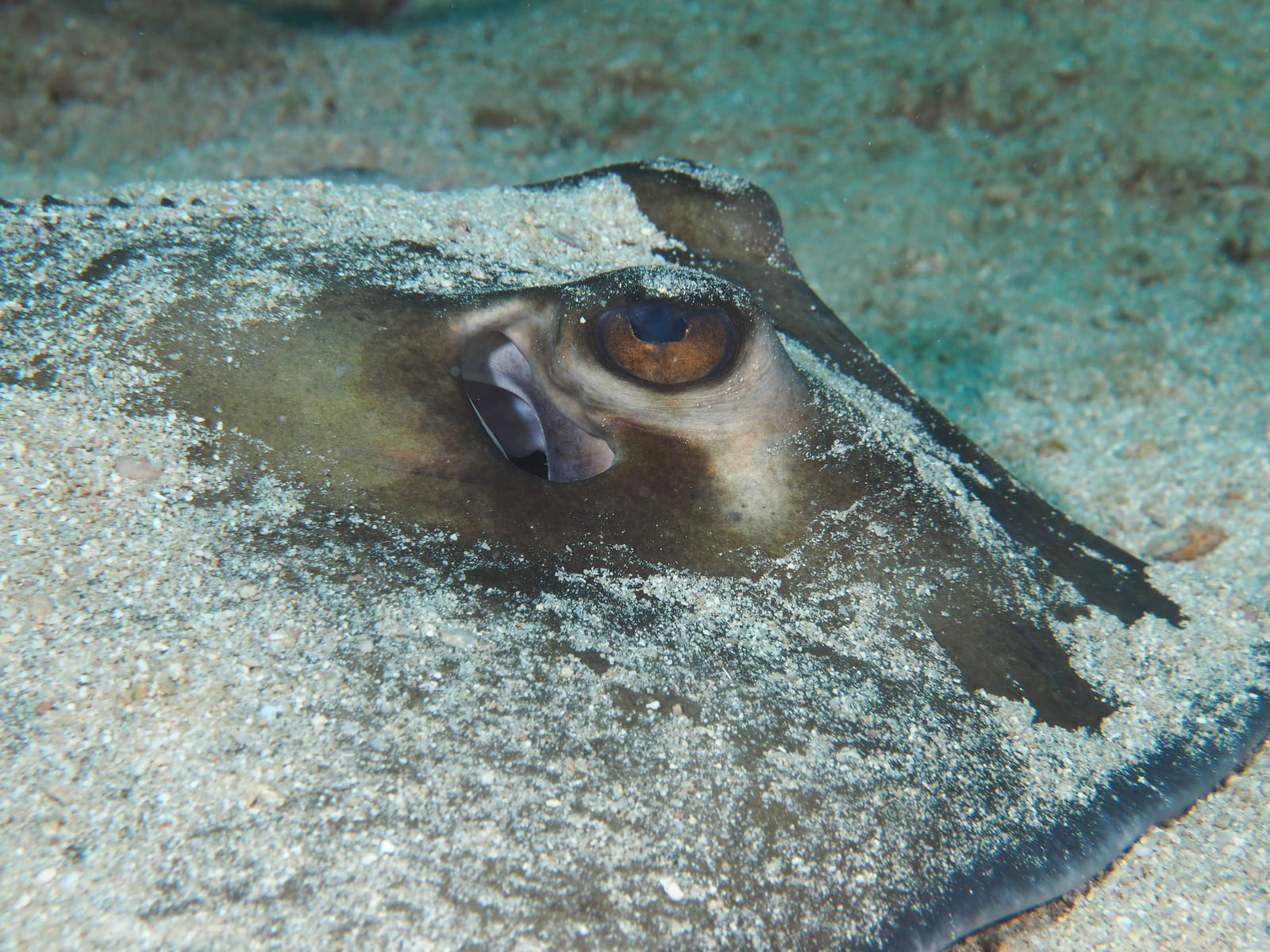
FamilyDasyatidaeAlso known asAtlantic southern stingrayDescriptionThe southern stingray is a whiptail stingray with a distinctive diamond-shaped disc and a long, whip-like tail bearing a venomous spine. It is a benthic predator that feeds on small fish, worms, mollusks, and crustaceans by using its flat body to pin prey against the substrate. This individual is camouflaged by burying itself in sandy seafloor, a common behavior used for ambush hunting and predator avoidance.HabitatFound in shallow coastal waters, sandy flats, seagrass beds, and coral reef margins from 1–53 m depth. Widely distributed across the Western Atlantic, from New Jersey to Brazil, including the Gulf of Mexico and Caribbean Sea.Conservation statusVulnerableNotesExtreme close-up macro shot focused on the eye and spiracle of the ray, which is almost entirely buried in sand. The dark disc margins and amber-colored eye with raised spiracle are visible. Species identification is based on body shape, coloration, and geographic likelihood; could potentially be another Dasyatid species but Hypanus americanus is the most common large stingray in shallow Caribbean/Atlantic sandy habitats.Creatures detected3 in frame- southern stingray (buried in sand)fish
- stingray eyefish
- stingray spiraclefish